
How The Attention Economy Redefined Our Existence
An Introduction To How We Got Here

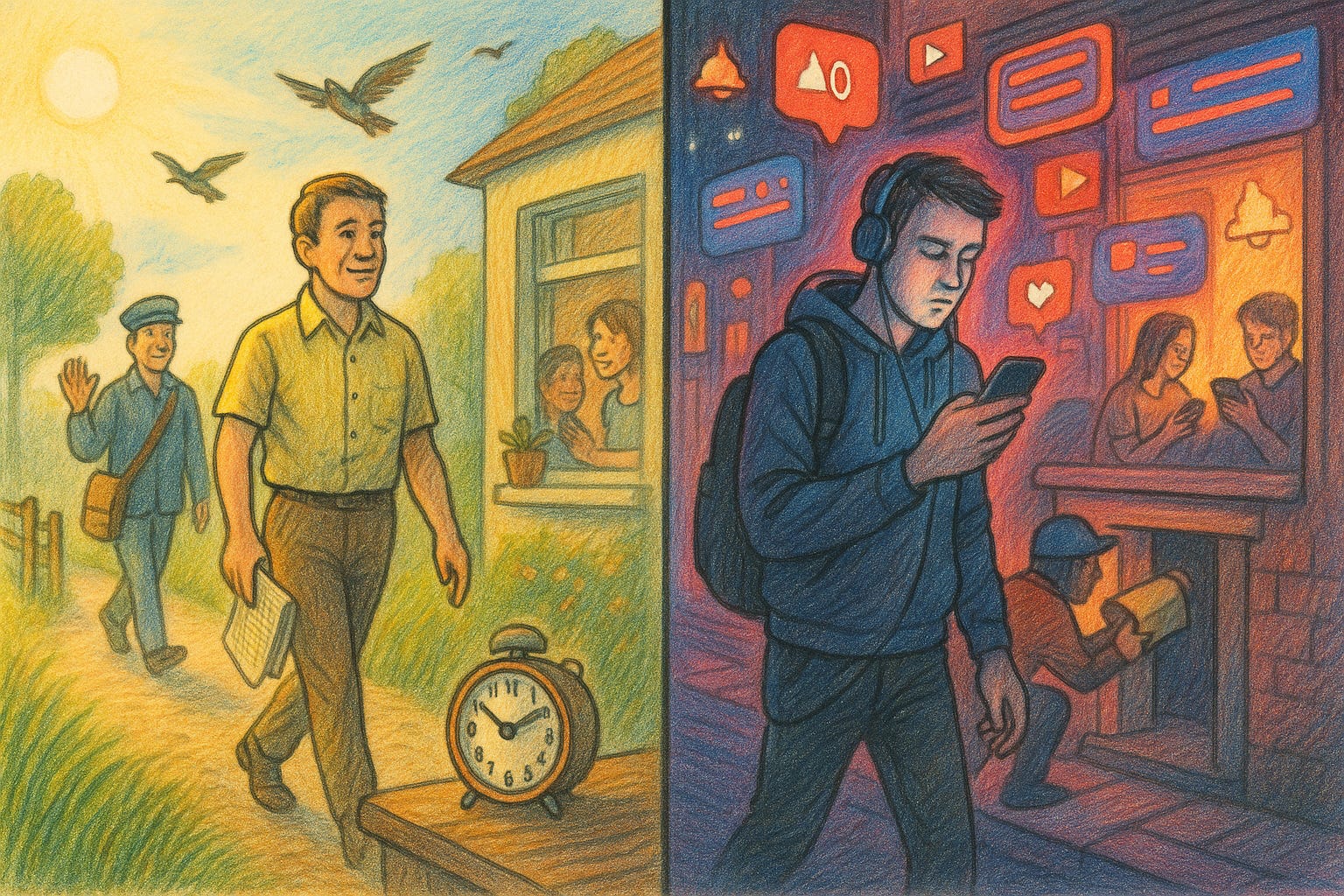
Two mornings, a world apart
1966
It’s summer. Your analogue alarm goes off. You have breakfast with your flatmates, rehashing last night’s antics. They turn on the radio - the Beach Boys are overly enthusiastically singing about ‘Good Vibrations’. As you head out the door, you pass the postman Mark. You both agree : London is too hot right now.
Birdsong drifts in the air. The walk to the tube is a mixture of boredom, daydreaming and reflection.
The day starts.
2025
It’s summer. Your custom Sencha themed alarm goes off. Your mind and body work in unison to instinctively grab an object that has become an extension of you. Despite its cold, weighty and unnatural feel, it soothes your mind.
You tap the sidebar, the blue light brings comfort and familiarity. 54 new notifications. 12 likes, 15 new followers, 10 shares, 7 retweets, 3 matches.
News time. Girl sleeps with one thousand guys in a day. Kimmy K has done nothing but something. A pop up states you could make $1m in 1 day with just 3 tips. You are still in bed. A friend messages : ‘U ok?!’ - it’s 7am, you haven’t responded to their 11pm message from yesterday.
You grab your headphones, plug in, crank it up. You give a fleeting nod to your flatmates on exit and open up the Holy Grail - social media. Wow, you missed a lot. He did this. She did that. They did this. They said that. A sea of red notifications, auto-play videos and bottomless feeds. You’re in Vegas baby. The lights, the action, the vibe, the excitement, it’s all here.
You walk out, face glued to your 5.81 x 2.82 inch prized possession. There’s an anonymous person at the front door pushing something through the letterbox. You begin a podcast, switch to YouTube, watch half a video, go back to WhatsApp, refresh your news outlet for new headlines and then revert to the podcast again for 2 minutes.
You reach the tube. It is hot isn’t it, you think.
The day starts.
These morning stories may feel glib but they point to a real change in how we experience life. And I see this everywhere I go. Phones, laptops, tablets and other devices have become the key portal through which we live life. They are so imprinted on our psyche that we all have daily thoughts that tell us to check our devices and we all have physical movements that naturally tell us to pick up a device even if the thought itself is not driving us towards that action.
The end result - to quote In Bruges - is that our lives are being controlled by “inanimate f***ing objects.”
So How Did We Get Here - The Rise of the Attention Economy
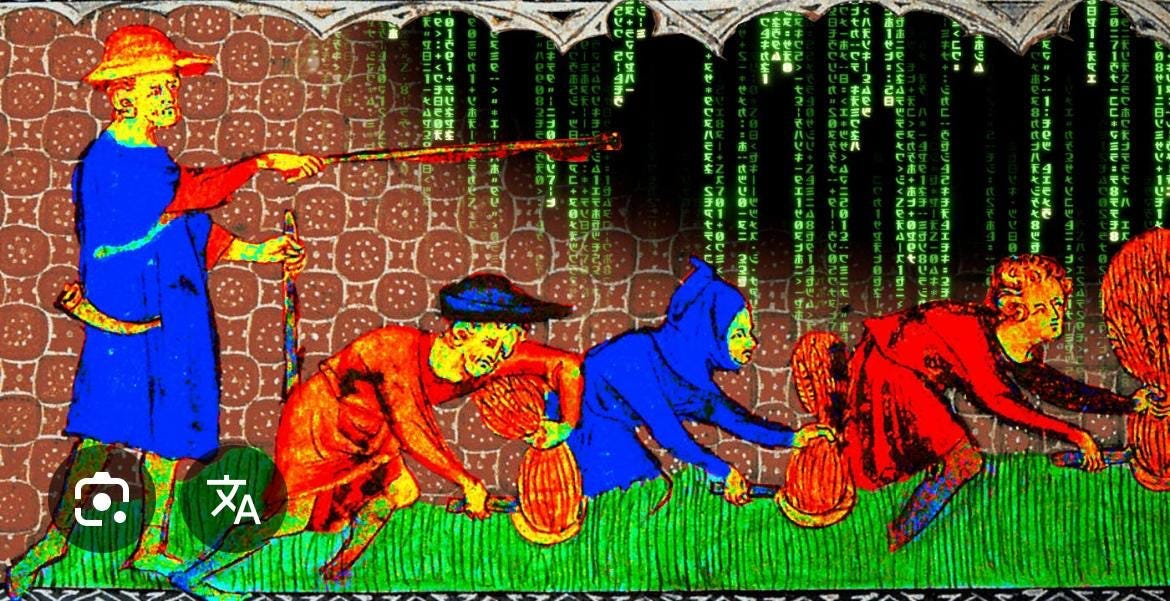
We got here because the monetisation and growth was reliant on one key driver - capturing and maintaining our attention.
When the web first went mainstream, many services were free. The trade-off was subtle: you get access to services but you watch adverts. At first, this meant static banner ads. But once companies realised advertising revenue scaled directly with the time people spent on their sites, the race began. The longer we stayed and the more ads we saw - the more money that was made.
Ethan Zuckerman calls this the “original sin of the internet”: the shift to an ad-based business model. That decision turned attention into currency and an extremely lucrative one too.
In 2023, global ad revenue hit $853 billion - enough to give every person on Earth $100 a year, forever. Nearly all of it is tied to one thing: how long we keep looking at screens.
The Race to the Bottom of the Brainstem
With so much potential, came intense competition. There are now over 18 million apps competing for your attention - all the time. Simple banner ads weren’t enough anymore. To stand out, platforms had to become more persuasive, more personalised and more addictive. Infinite scroll, autoplay, push notifications — each one designed to capture a little more of your time and, with it, a little more of your mind.
Tristan Harris, former Google Design Ethicist and now head of the Center for Humane Technology, describes how this competition led to a race to the bottom of the brainstem - deeper into your instincts, emotions, and identity.
Here’s how this system evolved over time:
1. Bring You Back
Platforms introduced red badges, pings, and pop-ups to trigger uncertainty and dopamine. You don’t always know what the notification is - which is exactly why you check. Random rewards are the most addictive.
2. Hook Your Ego
You stopped being a passive user and became a participant and contributor. Likes, shares, follower counts, and comments gave you validation and reasons to return.
3. Learn What Hooks You
Platforms began tracking everything — scrolls, pauses, replays, reactions — to learn your preferences and triggers. They fed you outrage, desire, and novelty to keep your emotions engaged.
4. Automate and Optimise the Loop
Machine learning refined the cycle and made what you see as compelling as possible. And with that came micro-targeted ads, tailored content, and an ecosystem designed to feel seamless, entertaining, and impossible to leave.
An impressive piece of behavioural design.
Maybe you knew all this. Maybe you didn’t.
But take a moment to reflect:
When was the last time you were bored?
The last time you left the house without your phone?
The last time you felt an urge to just look at a screen mindlessly?
Those are breadcrumbs - clues that the attention economy is working exactly as intended…
So isn’t it time to break the model? To shift away from making billions addicted to devices and to start thinking about how technology and humanity can live in better harmony.
Because how we build, design and interact with our digital world will determine the quality of our human world - our focus, our relationships, even our sense of self.
Next?
📚 Making Sense of the Problem : Digital Addiction
A clear-eyed look at technology’s influence and the steps we can take to build a better life within it.
If you are enjoying these please subscribe and share with those interested.
It’s time to build a better tech-human future.
Thank you very much for taking the time to read this. I appreciate it. 🙏